Real vs Fake Crystals: How to Identify Authentic Stones
- Posted on
- 0 comments
- by tiaracrystalshop
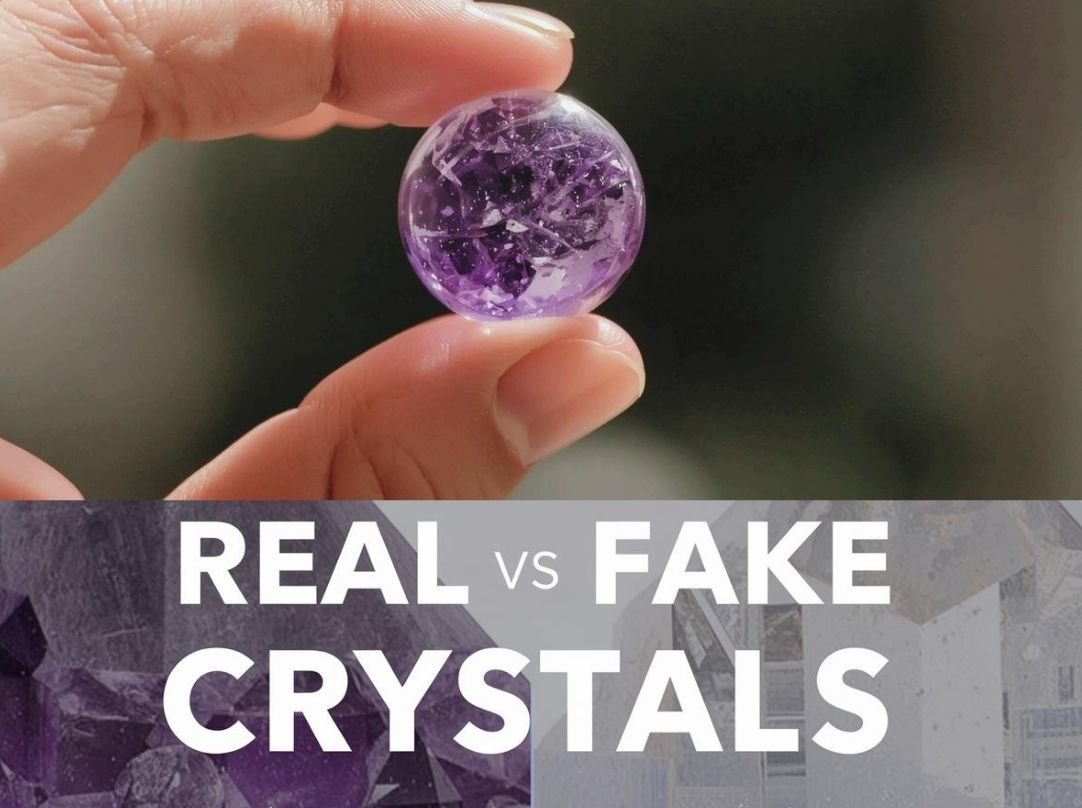
Crystals attract people for beauty, energy, and meaning. However, the crystal market now contains many fake stones.
As a result, buyers often feel confused or misled. Therefore, learning how to identify authentic crystals matters. This guide on real vs fake crystals explains clear differences between real vs fake crystals. It also covers popular stones like pyrite, selenite, rose quartz, and clear quartz.
Why Identifying Real Crystals Is Important
People buy crystals for healing, energy, or decor. Fake stones lack depth and character. Fake crystals do not carry the same energy though they look appealing in the first glance. Appearance alone never guarantees authenticity. Knowing the difference protects both your money and intention. It also helps you build trust with sellers and brands.
How to Identify Real versus Fake Crystals
Common Materials Used to Fake natural Crystals
Glass
Plastic or resin molds
Dyed cheaper/ low quality stones
Reconstituted crystal powder
- Synthetic/lab grown Crystals
General Signs of Real vs Fake Crystals
Before examining specific stones, check these universal signs.
Signs of Real Crystals
Natural inclusions or internal lines
Slight color variations
Cool temperature when touched
Irregular or imperfect shapes
Signs of Fake Crystals
Perfect clarity or uniform color
Too shiny or too colorful
Lightweight feel
Molded or identical shapes
- Cheaper than usual price
Common Crystals That Are Often Faked
Pyrite (Fool’s Gold): Imitated with brass or resin.
Selenite: Often replaced by glass or resin.
Rose Quartz: Dyed clear quartz is common.
Clear Quartz: Glass is frequently sold as quartz.
Amethyst & Citrine: Heat-treated or dyed stones are common fakes.
Lets understand a few differences in detail.
Fake Pyrite versus real Pyrite
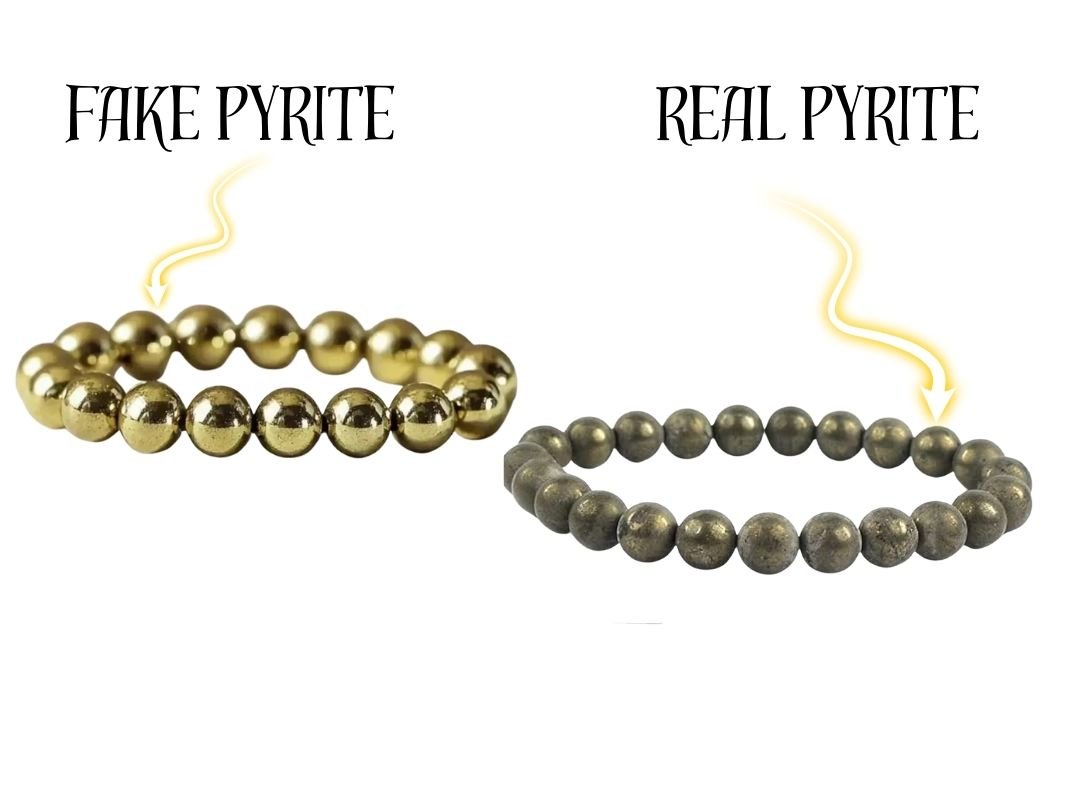
Pyrite looks like gold. Therefore, many sellers sell fake pyrite or brass imitations. Real pyrite gleams but has a brassy yellow tone.Fake pyrite often looks too shiny or too golden.
Natural Rose Quartz versus Synthetic rose quartz
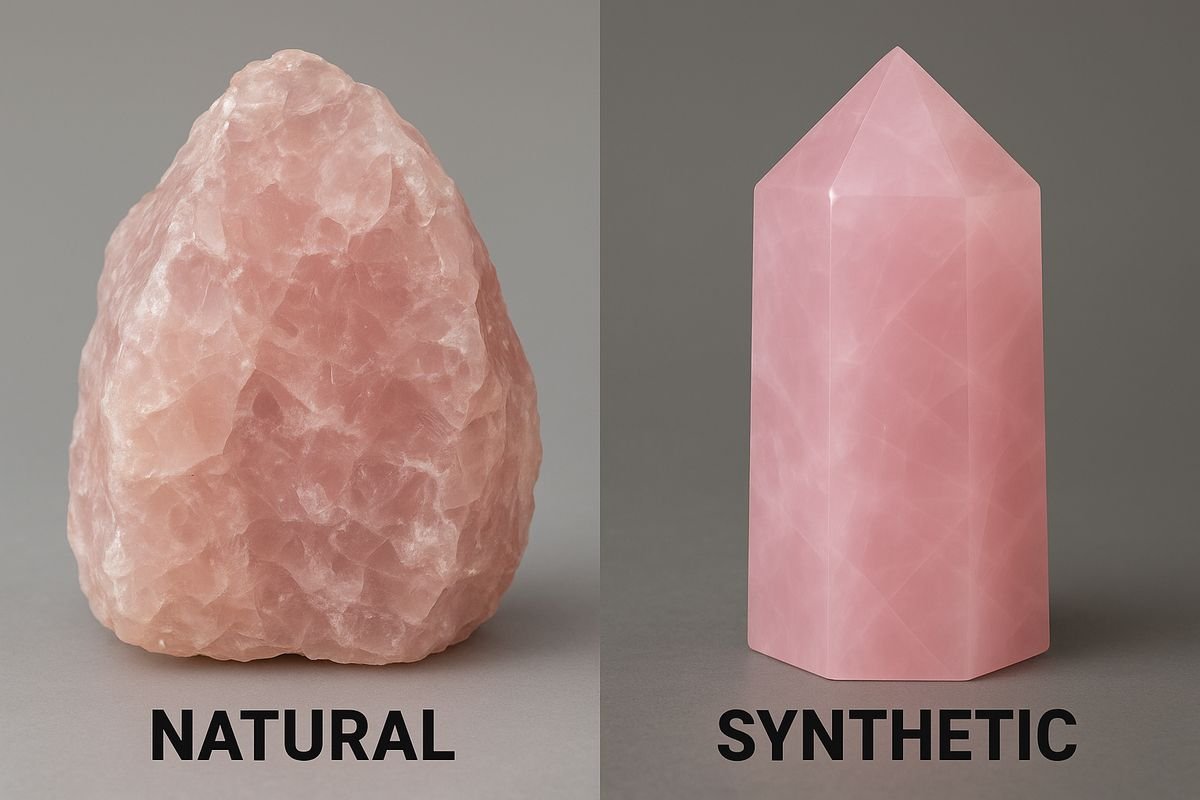
Rose quartz is soft pink. Some sellers dye cheaper clear quartz to mimic rose quartz. Real rose quartz has a soft pink hue that looks natural. Fake or dyed stones show overly bright, uneven color.
Natural Selenite Versus Synthetic Selenite
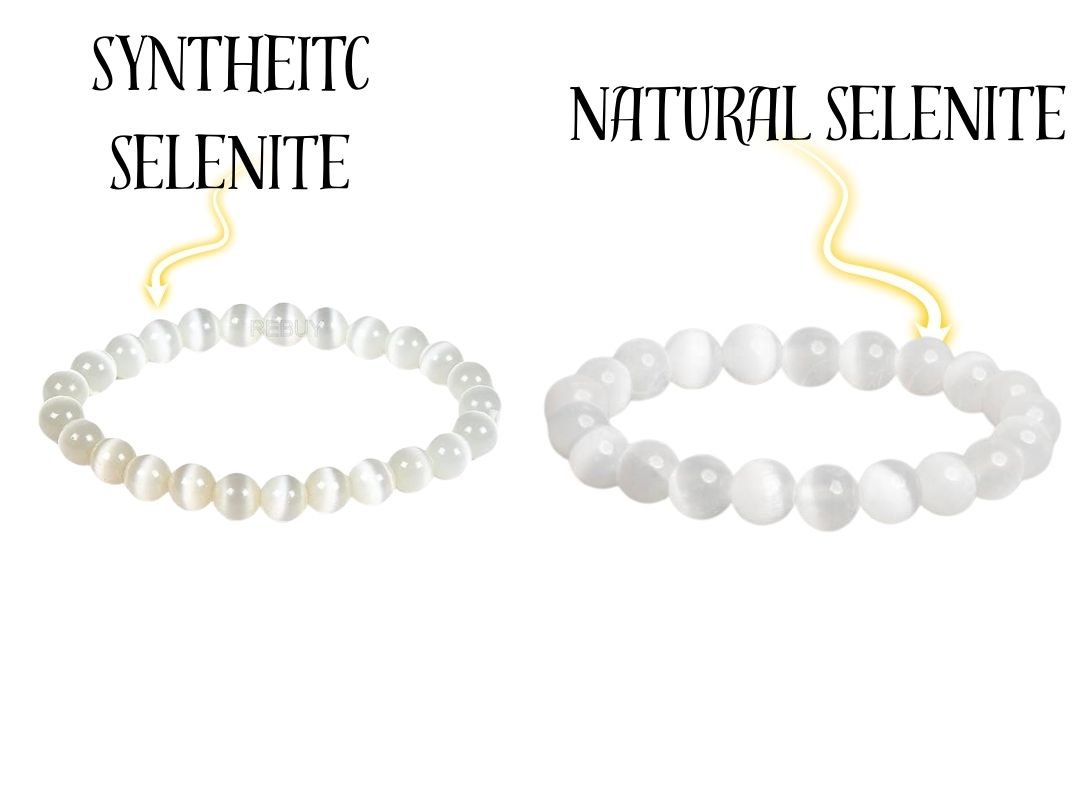
Hold it under light. Real selenite shows fibrous lines inside. Fake versions may look hollow or perfect.
Also, selenite scratches easily with a fingernail. Fake stones made from glass or plastic do not scratch. Manufacturers create it using glass, resin, plastic or gypsum substitutes.
Real verus Fake Clear Quartz
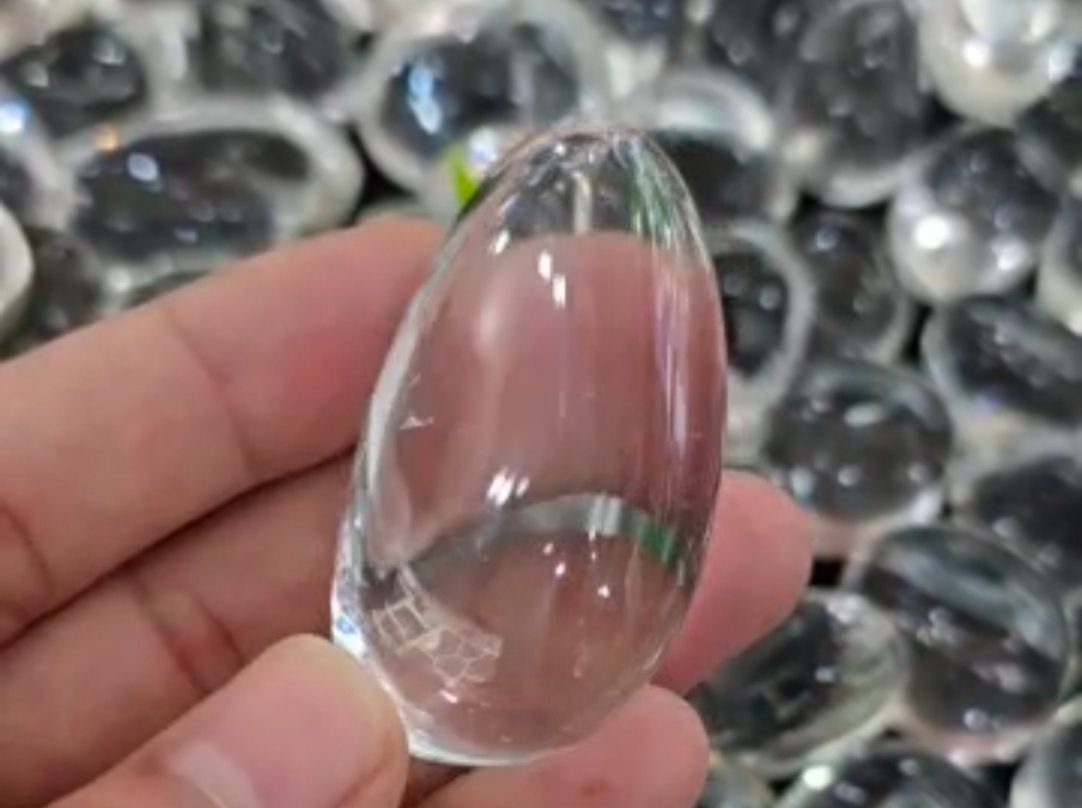
Real clear quartz feels solid and cool.It contains natural inclusions or internal fractures. These inclusions look like wisps, clouds, or fine lines.The surface may appear slightly uneven. Natural quartz refracts light unevenly.Fake clear quartz usually looks too perfect.It appears extremely clear and uniform.Most fake versions use glass or plastic.Air bubbles may appear inside.The surface feels overly smooth.Fake quartz warms quickly in your hand.Clear quartz looks similar to glass.This similarity makes it easy to imitate.Manufacturers often mold glass into crystal shapes.These pieces look flawless and cheap to produce.As a result, fake clear quartz floods the market.
Key traits of fake clear quartz:
Perfect clarity
Rounded air bubbles
Glass-like shine
Lightweight feel
Smooth, polished surface.
Browse our collection of genuine stones
Easy At-Home Tests for Crystal Authenticity
1. Light Test
Hold the stone under direct light.
Real crystals refract, scatter, or reflect light uniquely.
Fake stones often have flat, glassy shine.
2. Scratch Test
Some minerals scratch softer surfaces.
For example, selenite scratches easily.
Glass or resin often will not scratch cleanly.
3. Temperature Test
Real stones stay cool for longer.
Fake plastic warms up quickly in your hand.
4.Weight Test
Compare size and weight.
Real stones usually feel heavier.
Avoid harsh scratch or break tests.
learn more about caring for your crystals
Lab testing for Crystal Authenticity
Laboratory testing offers the most reliable way to confirm crystal authenticity. These tests identify composition, structure, and natural formation. Aks for lab certificates if the seller provides it. You can also get it lab tested yourself any authentic gem labs.
When Lab Testing Is Recommended
Lab tests are useful for:
High-value crystal purchases/ gemstones
Rare or collector-grade stones
Jewelry-grade crystals
Disputed authenticity claims
Are Lab Grown Crystals Fake?
Lab-grown crystals are not technically fake, but they are not natural.They contain the same chemical composition as real crystals. For example, lab-grown quartz is chemically identical to natural quartz.
However, it forms in a lab within days or weeks, not in nature.
How Lab-Grown Crystals Differ from Natural Crystals
Formation: Lab-grown forms artificially; natural forms over thousands of years.
Internal Structure: Lab crystals may lack natural inclusions or lines.
Price: Often cheaper than authentic natural stones.
Appearance: Lab-grown crystals look very uniform and flawless.
Why Lab-Grown Crystals Are Popular
They offer a visually perfect alternative for jewelry.
They are ethically sourced with no mining impact.
They can mimic expensive stones like emerald, sapphire, and quartz.
Limitations
Lab-grown crystals do not carry natural geological energy.
Collectors and crystal healers often prefer natural formations.
Fake stones (resin or dyed stones) are not the same as lab-grown crystals.
Bottom line: Lab-grown crystals are real in composition but not natural. They are not fake, but they differ from authentic, naturally formed crystals.
Tips to buy Authentic Stones
Look for natural inclusions under light.
- Hold in your palms. If you are sensitive, you will feel its energies if it a real stone.
Avoid overly glossy or plastic-looking stones.
- Check the certificate of authenticity if the seller provides one.
- Check the price. If it is too cheap or heavily discounted , it might be an imitation , not the real crystal.
Buy authentic crystals at TiaraCrystalShop
Final Thoughts Real Vs Fake Crystals
Fake crystals continue flooding the market. However, knowledge helps you avoid mistakes. By learning crystal characteristics, you shop confidently.Always look for natural imperfections and realistic colors.Ask questions and compare stones carefully. Most importantly, trust your awareness and intuition.Authentic crystals always feel different when chosen mindfully.